Groundwater Management During Construction and Dewatering Design

Introduction
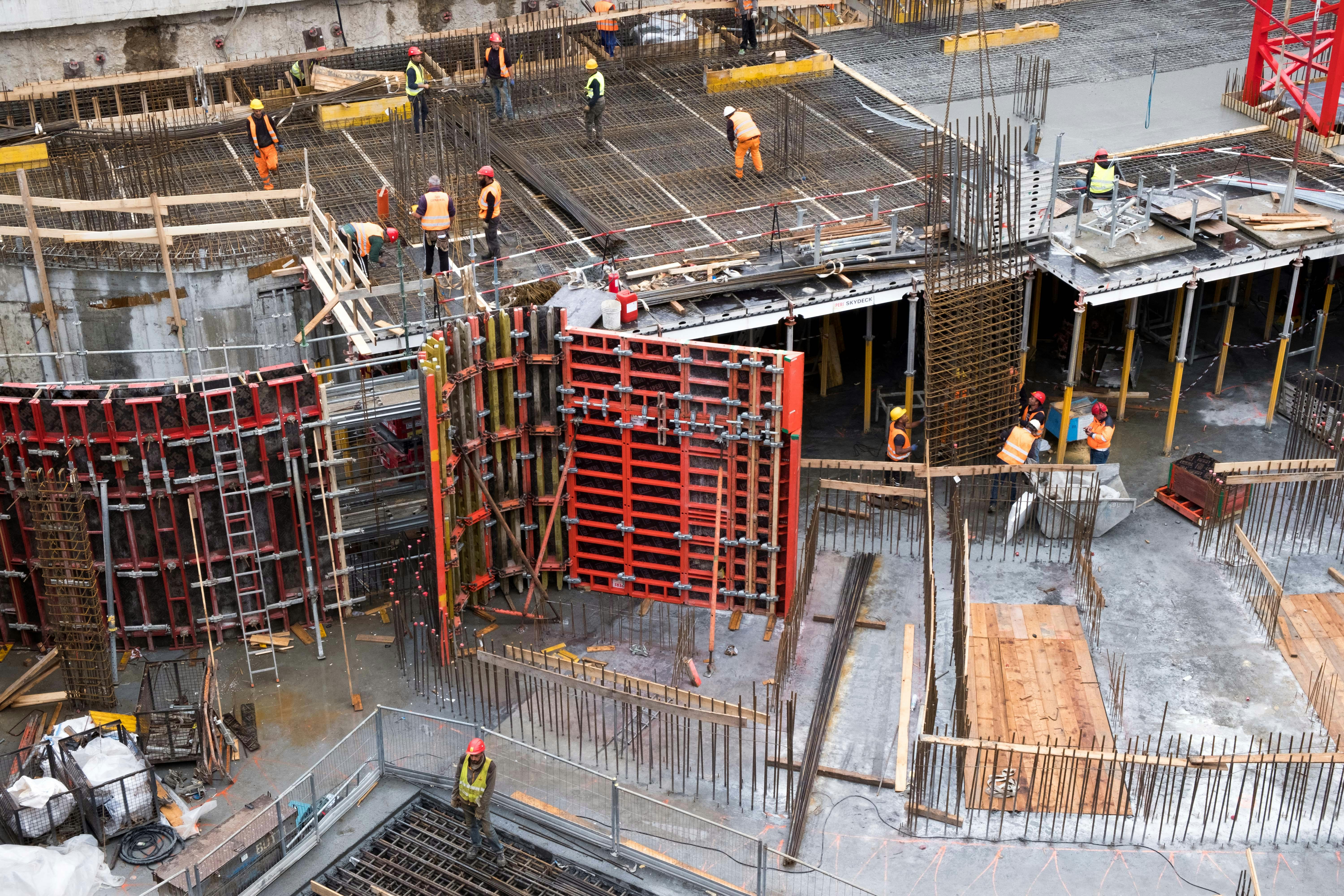
Managing groundwater effectively during construction is a cornerstone of geotechnical engineering. When construction takes place below the natural water table or in regions with perched groundwater, unchecked water inflow can destabilize slopes, hinder machinery, increase excavation costs, and ultimately jeopardize structural safety.
Groundwater is not just a nuisance, it’s a geotechnical force that demands careful control and design. Whether constructing a deep basement, a tunnel, a sewer line, or a water treatment plant, understanding subsurface water conditions is critical. This blog explores how groundwater is managed during construction using dewatering techniques, highlights key design principles, and offers practical insights from field and laboratory experiences.
What is Dewatering?
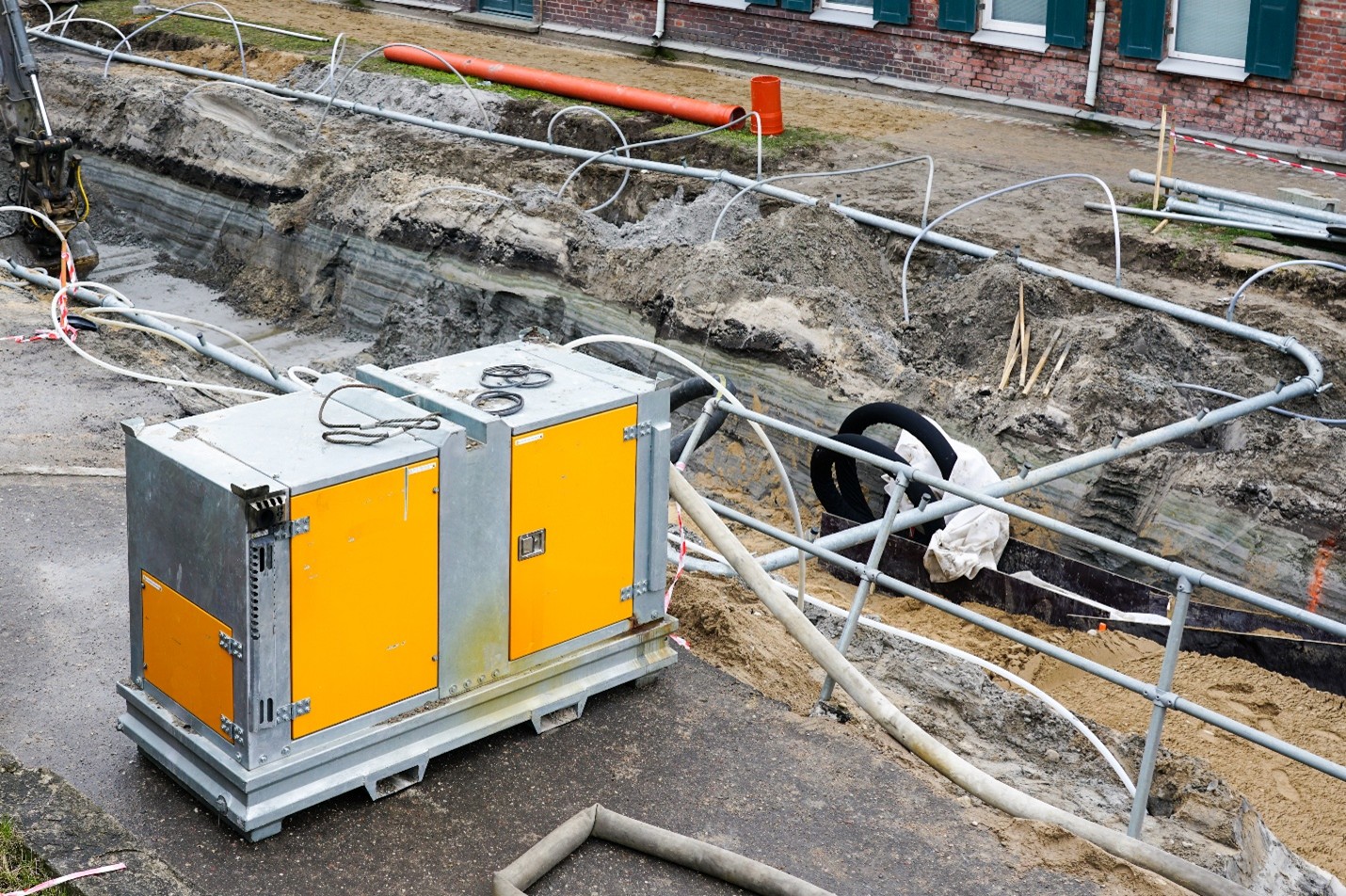
Dewatering is the deliberate removal of groundwater or surface water from a construction site, allowing for safe and dry working conditions. It includes all measures taken to reduce groundwater levels and hydraulic pressure within the soil mass surrounding the excavation.
Dewatering is not merely about "pumping water out." It encompasses
- Groundwater table control
- Seepage reduction
- Soil stabilization
- Base heave prevention
In other words, it’s a combined hydrogeological and structural engineering effort to ensure excavation safety and construction efficiency.
Why is Groundwater Management So Important?
Imagine excavating 15 feet into the ground in an urban environment where the water table lies just 6 feet below the surface. Within minutes, the pit can fill with water, saturating the soil, sloughing sidewalls, and rendering foundation work nearly impossible. More subtly, even if water isn’t visible, pore pressure in the soil can silently reduce bearing capacity and trigger long-term settlement or failure.
Groundwater-related risks include:
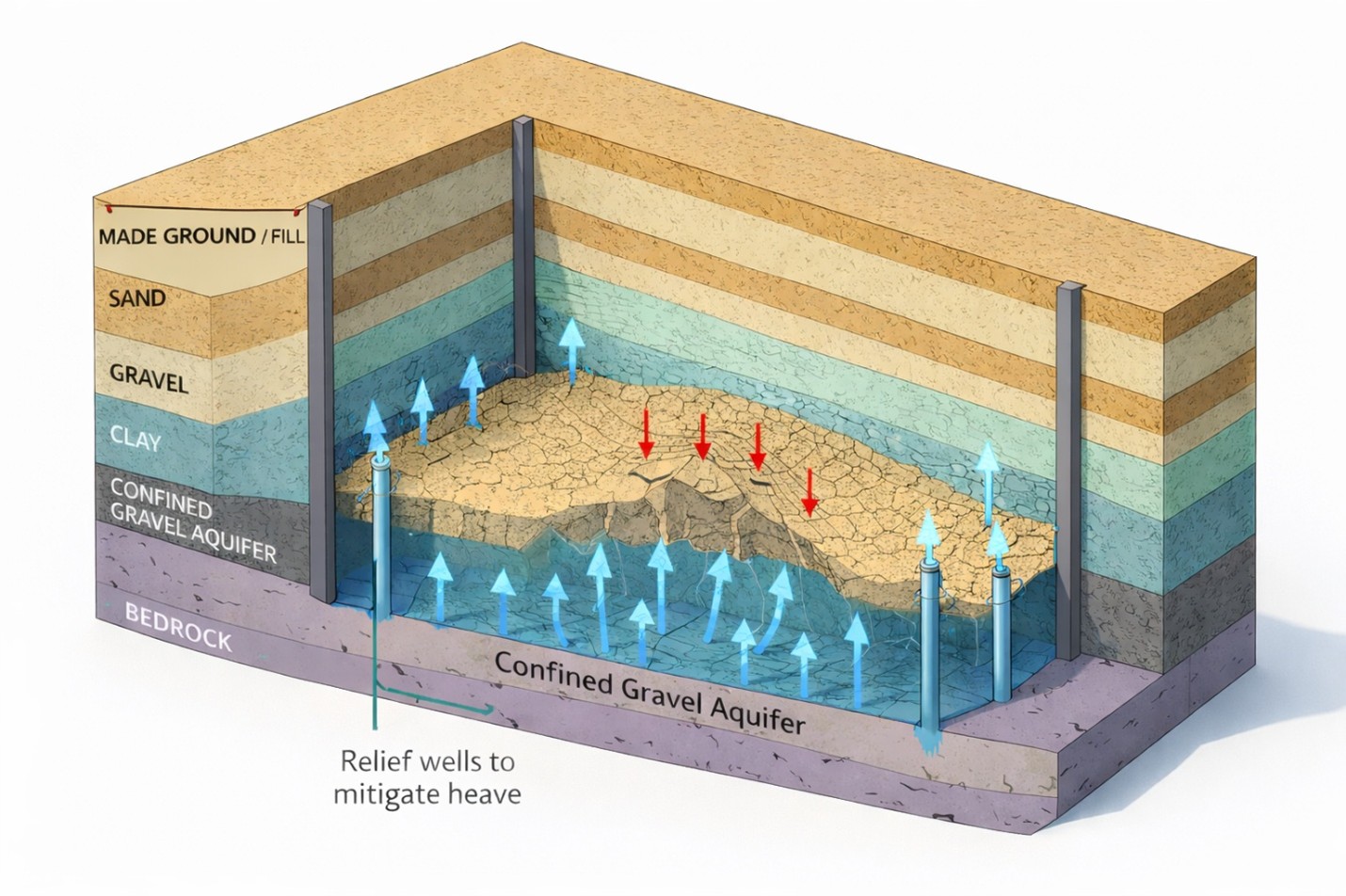
- Uplift or base heave in confined aquifers
- Loss of soil strength in fine-grained soils due to saturation
- Excessive settlement caused by sudden drawdown
- Flooding and construction delays
Thus, proactive groundwater management isn’t optional, it’s essential.
Common Dewatering Methods
The choice of dewatering method depends on soil type, excavation depth, groundwater recharge rate, and nearby infrastructure. Below are the most commonly used systems:
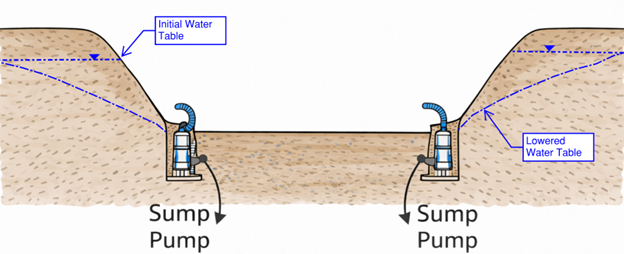
1. Sump Pumping
This method collects groundwater in localized low points("sumps") and pumps it out. It’s ideal for shallow excavations in free-draining soils like sand or gravel.
Key Advantages:
- Cost-effective and quick to deploy
- Simple layout using submersible or centrifugal pumps
Drawbacks:
- Not effective in fine soils (clays, silts)
- Can cause erosion if not filtered properly
- Takes up space within the excavation
2. Wellpoint Systems
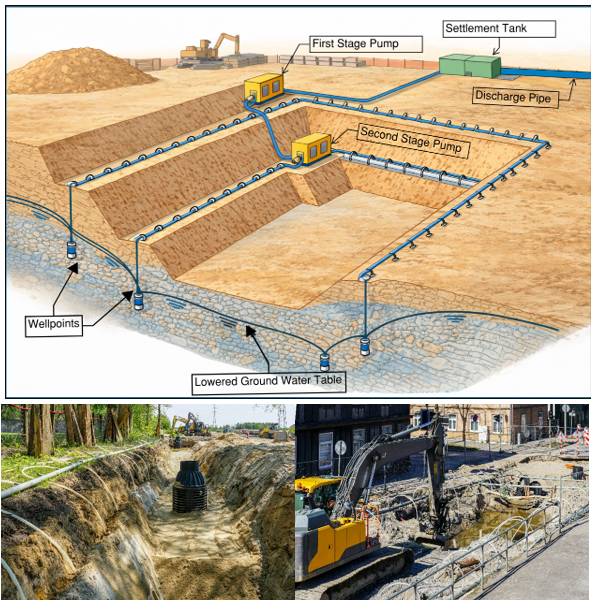
This method consists of closely spaced shallow wells (1.5–2inches in diameter), each connected to a vacuum header system. Suitable for depths up to 5–8 meters, especially in sandy or silty soils.
Benefits:
- Provides uniform groundwater drawdown
- Modular and scalable across large areas
Challenges:
- Less effective in layered or low-permeability soils
- Vacuum limitations at greater depths
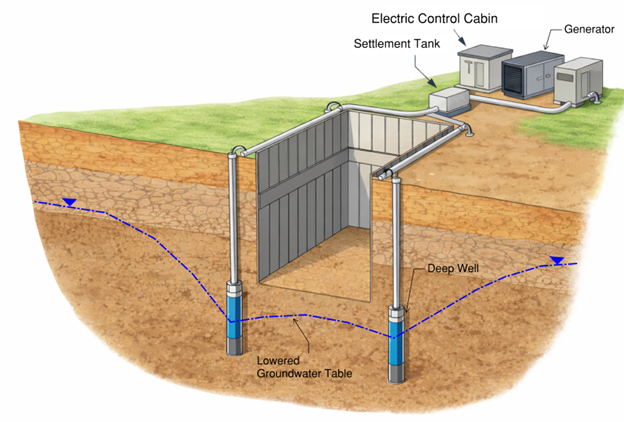
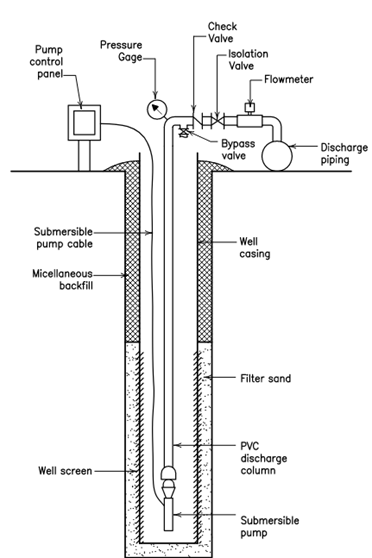
3. Deep Well Systems
These use large-diameter wells with submersible pumps to extract water from depths exceeding 8 meters, up to 30 meters or more in some cases.
Advantages:
- Handles large inflows and deeper groundwater tables
- Long-term groundwater management solution
Considerations:
- Higher installation cost
- Requires monitoring of filter clogging and pump operation
4. Electro-Osmosis
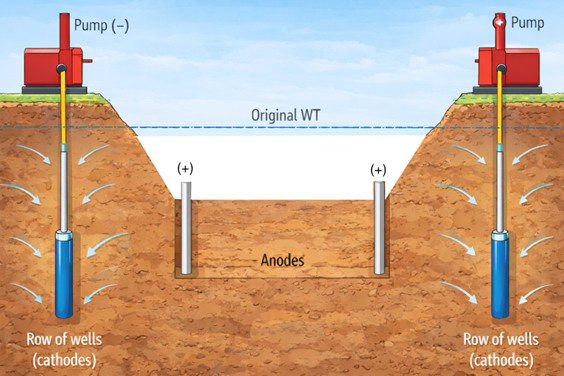
An advanced method where an electric field moves water through fine-grained soils, such as clay or silt, that are otherwise impervious to pumping.
Strengths:
- Effective in low-permeability soils
- Strengthens soil by reducing water content
Limitations:
- High energy cost
- Requires trained technicians for setup and monitoring
Dewatering System Design Considerations
Effective design starts with understanding the geotechnical and hydrogeological conditions at the site. Important parameters include:
- Excavation dimensions and depth
- Soil permeability and stratigraphy
- Groundwater chemistry and recharge rate
- Proximity to streams, structures, and utilities
- Risks of uplift and settlement
For example, in confined aquifers, water trapped between impermeable layers can cause upward pressure, resulting in base heave if not accounted for. A separation zone between the aquifer and the excavation base is essential in such cases.
Role of Numerical Modeling
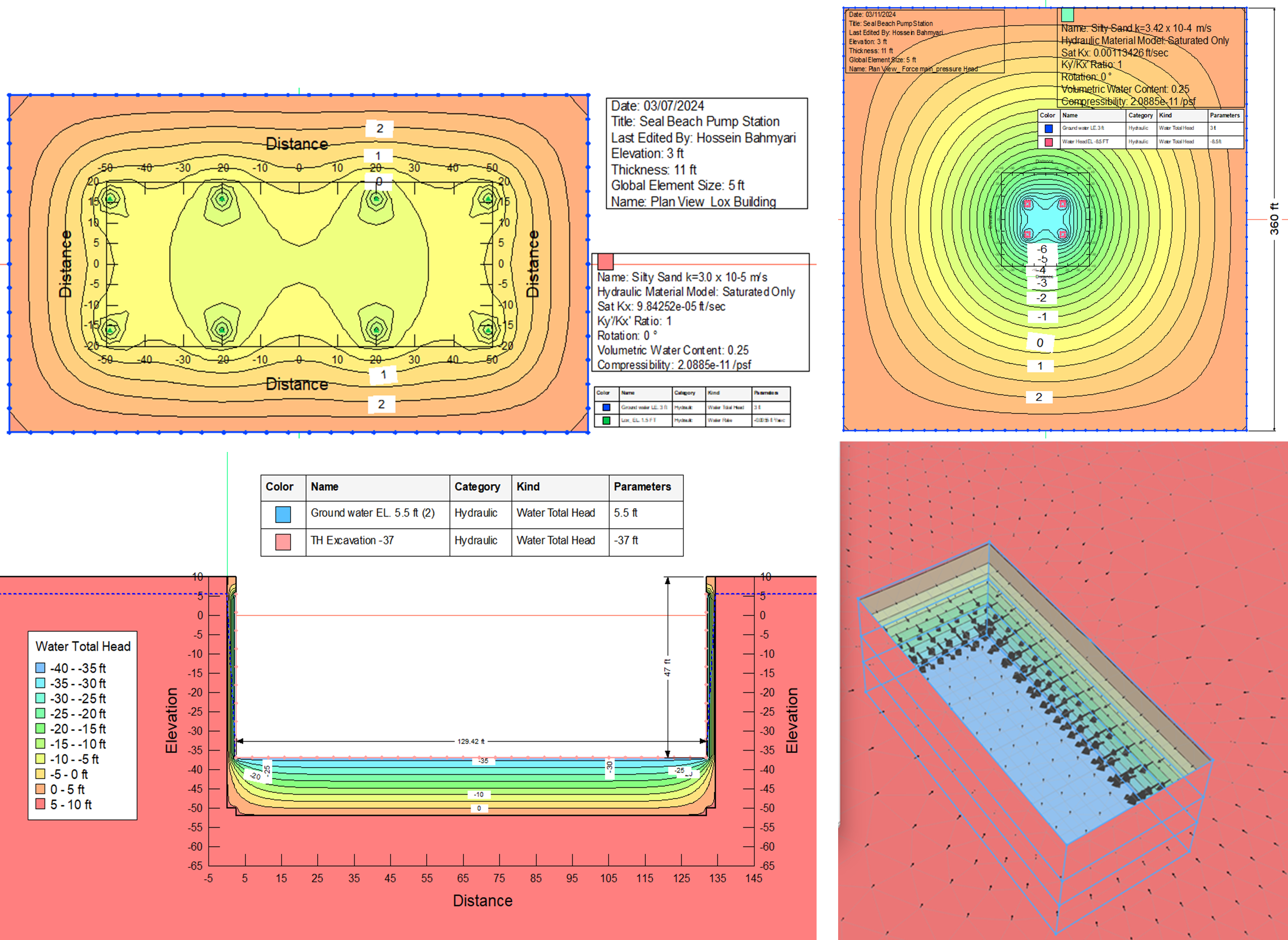
Analytical and numerical models (e.g., MODFLOW, SEEP/W) are increasingly used to simulate groundwater flow and optimize dewatering system design. These models help predict:
- Drawdown zones
- Radius of influence
- Impact on adjacent structures
- Discharge volume
-
Conclusion
Groundwater control during construction isn’t a one-size-fits-all approach. It requires a deep understanding of the soil behavior, groundwater dynamics, and construction sequence. Whether through sump pumping or advanced electro-osmosis, the right dewatering solution protects your site, your timeline, and your investment.
Investing in proper investigation, design, and monitoring doesn’t just lower water, it raises the reliability and safety of your project.
Twining offers dewatering evaluation and design support services. Learn more here.

Hossein Bahmyari brings over 20 years of extensive experience in geotechnical engineering design, analysis, and investigation to Twining. His experience includes a diverse portfolio of projects, including high-rise structures, underground facilities, and critical infrastructure such as tunnels, highways, dams, and levees. Hossein works with a wide range of clients, including private companies and government entities like State Departments of Transportation, the Army Corps of Engineers, NAVFAC, State and National Water Authorities, and the Federal Highway Administration. Beyond his project-based contributions, Hossein actively engages in research initiatives to advance the field of geotechnical engineering. His expertise ranges from soil stabilization and remediation, slope stability analysis, hydromechanical behavior of soils, and deep foundations. Hossein currently serves as a committee member for geotechnical technical committees within the American Society of Civil Engineers (ASCE) and holds board memberships for national and international geotechnical journals.

%20(11).png)